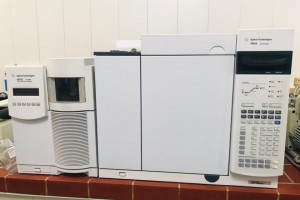
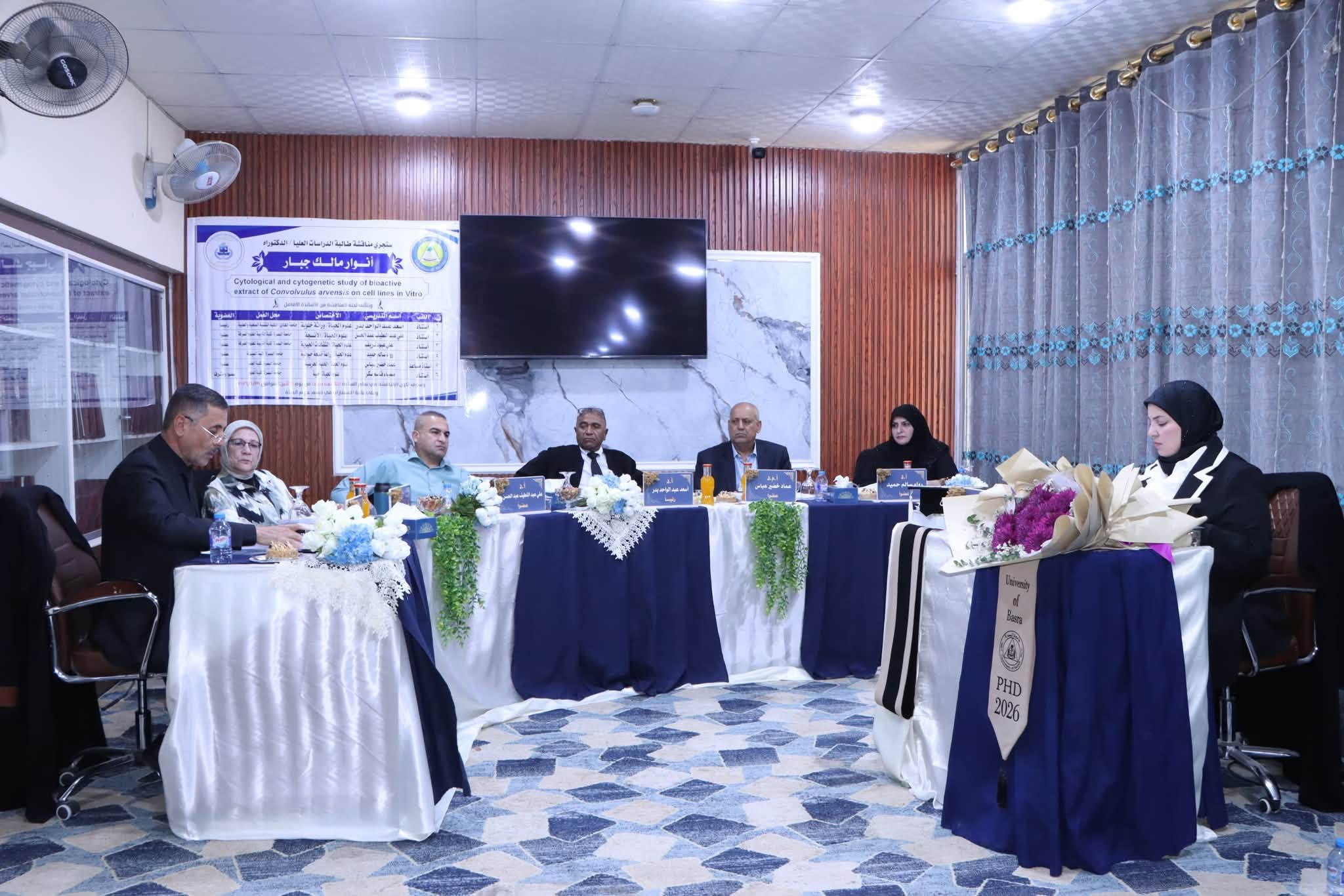
The College of Education for Pure Sciences reviewed a doctoral dissertation in the Department of Life Sciences on "Cellular Characterization and Inhibitory Effect of the Active Bio-Extract of Field Ivy (Convolvulus arvensis) on Cancer Cell Lines in Vitro." The dissertation, presented by researcher Anwar Malik Jabbar, aimed to explore the potential of bio-components extracted from the leaves of the field ivy plant (Convolvulus arvensis) as a promising source of anticancer agents. The study aimed to extract, isolate, and characterize the active compounds using modern chromatographic and spectroscopic techniques, and then evaluate their anticancer activity using a range of cellular and molecular tests
 .
.
The thesis concluded that the plant contains a variety of active compounds, particularly flavonoid glycosides and Stigmasterol, which demonstrated significant activity in inhibiting the growth of cancer cells, especially liver cancer cells (HepG2) and breast cancer cells (MCF-7), with a limited effect on normal cells (Vero), indicating promising therapeutic selectivity.
The study also showed that these compounds induce apoptosis by activating both intrinsic and extrinsic pathways, as confirmed by the activation of caspase-8 and caspase-9 enzymes, in addition to the morphological changes in cancer cells. Furthermore, molecular docking studies supported these findings, demonstrating Stigmasterol's ability to bind to key apoptosis-regulating proteins, such as DR5 and BCL-2, thus enhancing its anticancer mechanism of action.
Important News


viewed most