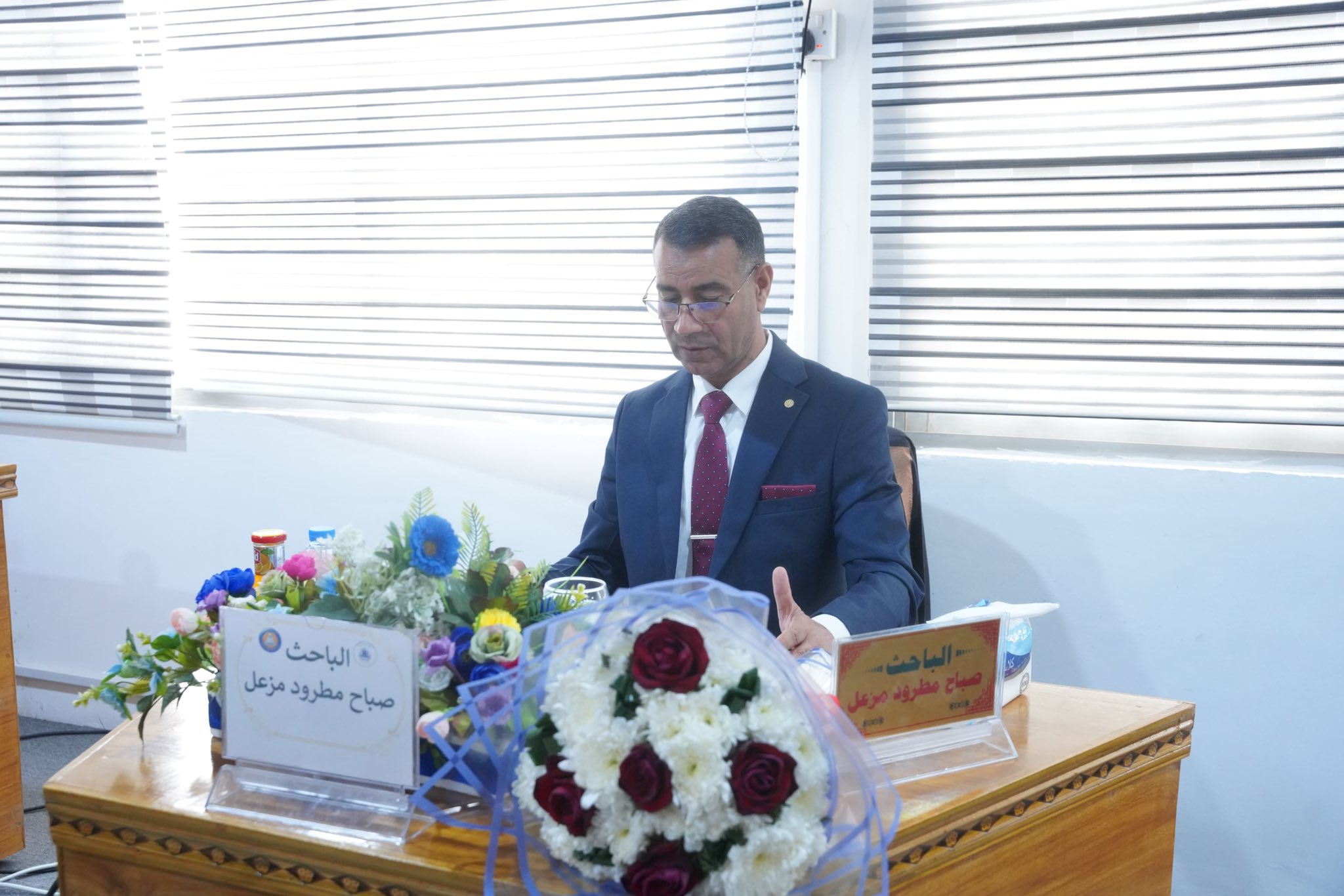
The College of Education for Pure Sciences, Department of Chemistry, reviewed a master's thesis on the preparation, characterization, and biological activity study of novel heterocyclic ligands and their metal complexes. The thesis, presented by researcher Sabah Matroud Muzal, included the preparation of several tertiary pyrazolene derivatives. This began with the preparation of galcones via Claesen-Schmidt condensation, involving the condensation of various benzaldehyde substituents with various acetophenone substituents in the presence of aqueous sodium hydroxide in ethanol. Pyrazolene derivatives were also prepared by the cyclic condensation of galcones with 80% aqueous hydrazine (NH₂NH₂·H₂O) in glacial acetic acid. Additionally, pyrazolene derivatives were prepared by the cyclic condensation reaction of galcones with phenylhydrazine (Ph-NHNH₂) in methanol in the presence of concentrated hydrochloric acid droplets. The prepared compounds were characterized using various spectroscopic techniques, including Fourier transform infrared spectroscopy (FT-IR), nuclear magnetic resonance (NMR), and electron microscopy (EI).
Some of the prepared pyrazolene derivatives were used as ligands to synthesize novel coordination complexes of copper(II). These complexes were characterized spectroscopically using FT-IR, UV-Vis spectroscopy, thermogravimetric analysis (TGA), and electrochemical sequencing (ESI). Electrical conductivity (EC) and magnetic susceptibility (MS) were also measured. The copper complexes were found to be electrolytes in dimethylformamide (DMF) solvent, exhibiting high molar conductivity values with a 1:2 ligand-metal ratio. Based on the paramagnetic properties observed in these complexes, as determined by the magnetic susceptibility results, it is predicted that they will form a tetrahedral structure with the chloride ion outside the coordination domain. The cytotoxicity of the prepared pyrazolene derivatives and some copper complexes prepared from them at different concentrations was determined using the MTT staining technique for breast cancer (MCF-7) and lung cancer (A549) cells. The inhibition efficacy and IC50 were calculated, and the results were compared with the standard chemotherapy agent Doxorubicin. The P8Cu complex showed the highest cytotoxicity against breast cancer (MCF-7) and lung cancer (A549) cells
.
Important News


viewed most