The College of Education for Pure Sciences, Department of Physics, researched a master’s thesis on measuring uranium concentrations in soil samples from selected areas south of Dhi Qar Governorate.
The message submitted by the researcher (Safi Kilo Jaaz) included:
Measuring natural uranium concentrations in the soil of a number of areas located south of Dhi Qar Governorate, by analyzing (70) samples of surface soil at a depth ranging between (5-15) cm.
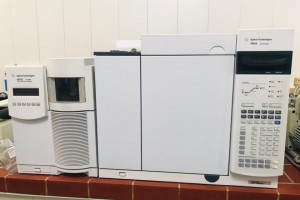
The study relied on two analytical techniques to estimate natural uranium concentrations. The first method was inductively coupled plasma mass spectrometry (ICP-MS) to measure concentrations directly, and the second method used CR-39 solid-state nuclear trace detectors (SSNTDs) technology to measure concentrations based on recording traces of fission fragments resulting from the 235U(n,f) reaction, by bombarding the models with slow neutrons with a neutron flux. After performing the chemical skimming process for the reagents, the density of the nuclear traces was calculated and then the concentrations of natural uranium were determined based on the calibration curve for standard models.
The results showed that natural uranium concentrations varied between the study areas depending on the nature of the soil and the surrounding environmental conditions. Using ICP-MS technology, the Souq Al-Shuyoukh area recorded the highest value of ppm uranium concentration (3.4), while the lowest value appeared in the Al-Tar area (ppm) (0.9), with an average ppm value (1.46). As for using solid nuclear trace detectors (SSNTDs) technology, the highest value of uranium concentration was recorded in the Souq Al-Shuyoukh area, ppm (0.19 ± 3.3), while the lowest value was recorded in the Al-Tar area, ppm (0.14 ± 1.02), with an average value of ppm (0.17 ± 1.49). The results extracted from the study indicate that the concentrations of natural uranium in all the samples studied fall within the internationally permissible limits according to the recommendations of the United Nations Scientific Committee on the Effects of Atomic Radiation (UNSCEAR), which are ppm (11.7), which indicates that there is no noticeable radioactive contamination in the study areas
 .
.

Important News



viewed most