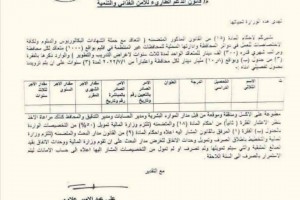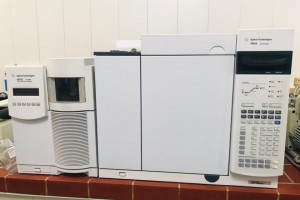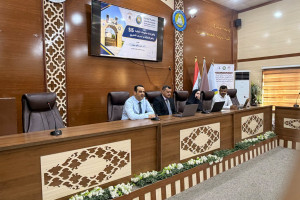
The College of Education for Pure Sciences, Department of Life Sciences, examined a master's thesis on the role of certain chemical treatments and MS salt levels in the acclimatization of in vitro-grown date palm seedlings. The thesis, submitted by researcher Ali Ibrahim Ahmed, aimed to determine the optimal concentrations of the chemical agents used, as well as to study the effect of MS salt levels on improving the acclimatization of date palm seedlings. The results showed that the chemical treatments used had a clear effect on the success rate of acclimatization, seedling growth, and their carbohydrate, protein, and chlorophyll content. The results also indicated that the use of coumarin significantly contributed to reducing contamination in the culture medium and improving the success rate of acclimatization, with a concentration of 45 mg/L recording the best results and exhibiting the highest number of roots. The study also demonstrated that MS salt concentration played a significant role in improving the studied traits. A 1/2 MS concentration significantly outperformed several other traits. Furthermore, the results showed a significant interaction between the physical conditions of the growing medium and MS salt concentration, which was reflected in several growth indicators, acclimatization success rates, and the carbohydrate, protein, and chlorophyll content of the leaves.
The study's findings contribute to identifying optimal treatments and conditions for in vitro propagation of date palm plants. This supports tissue culture and micropropagation techniques for date palms, and helps improve seedling production efficiency and increase acclimatization success rates
 .
.
Important News


viewed most