.jpg)
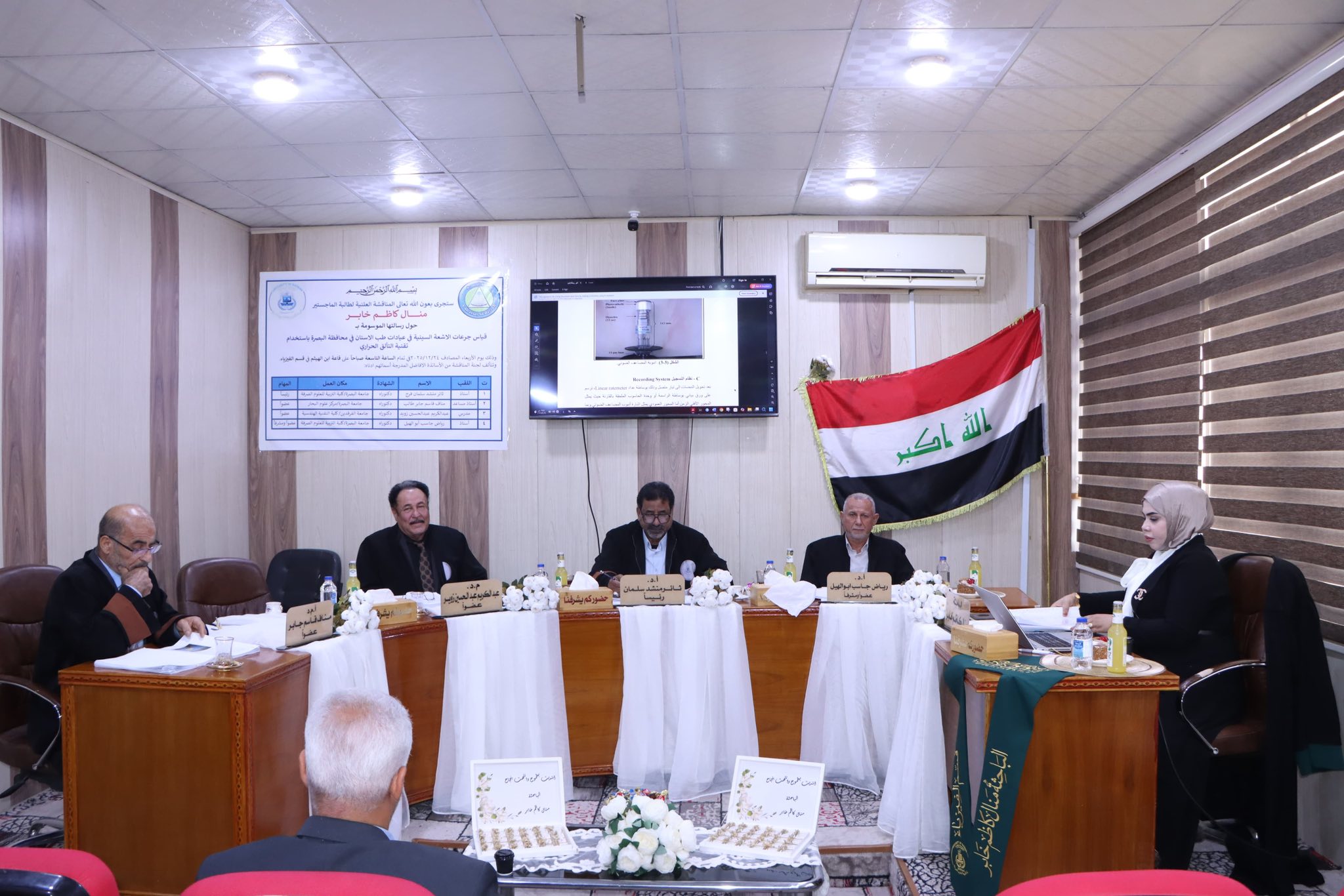
The College of Education for Pure Sciences, Physics Department, examined a master's thesis on "Measuring X-ray Doses in Dental Clinics in Basra Governorate Using Thermoluminescence Dosimetry." The thesis, submitted by researcher Manal Kadhim Khaber, involved using thermoluminescence dosimetry and specific dosimeters. Staff (dentists and assistants) were provided with badge holders containing dosimeters for specific periods (three months). These dosimeters were then collected, and the personal exposure readings of the staff were recorded. Radiation doses within the X-ray room were also calculated. To ensure the validity of these dosimeters, the properties of the thermoluminescence dosimeters for dysperium-doped calcium fluoride were studied. The thesis revealed a variation in radiation doses among the selected study sites. Some sites recorded lower radiation exposure levels, while others recorded higher levels, with some approaching the internationally recommended limit of 20. This variation is attributed to several factors, including the design of the control rooms. The results of the radiation dose measurements were then analyzed. The data recorded in dental clinics showed that the highest level of exposure was among dentists (36%) of the total measured dose. This was followed by radiation doses from the X-ray room (34%), and then dental assistants (30%).
Statistical analysis of the results indicates a strong correlation between the radiation doses recorded among dentists, assistants, and the X-ray room
 .
.
Important News


viewed most