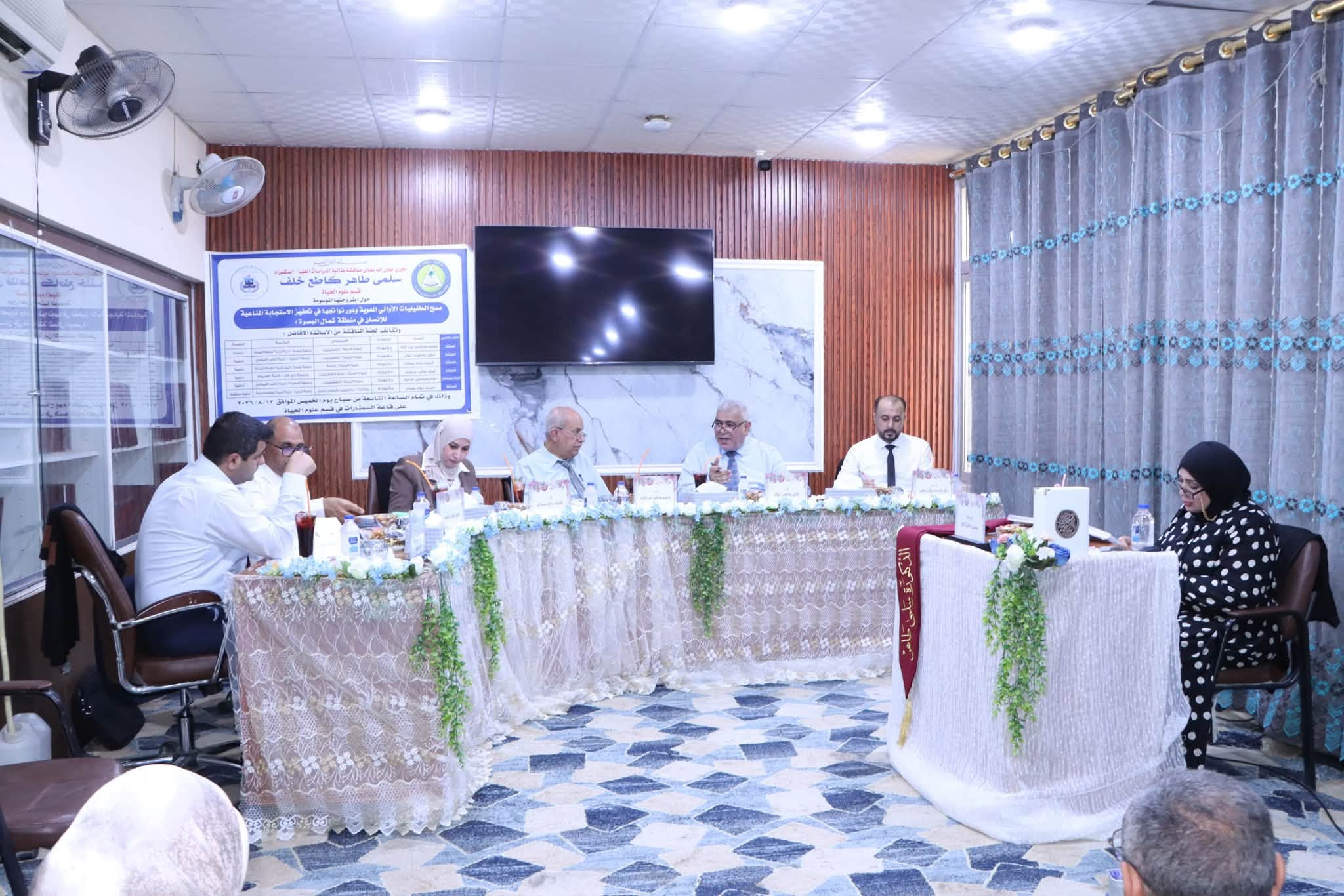
The College of Education for Pure Sciences, Department of Life Sciences, reviewed a doctoral dissertation on the molecular survey and diagnosis of certain intestinal protozoan parasites and the evaluation of the immune response in patients in northern Basra Governorate, Iraq.
The dissertation, presented by researcher Salma Taher Katea, aimed to assess the prevalence of intestinal protozoan parasites (Amoeba, Giardia, and Cryptosporidium) in northern Basra using microscopic and molecular examination, correlating this with immunological indicators and comparing them with those from hospitals in Basra city center.
Parasitic Prevalence (Microscopic Examination): The highest incidence of amoebiasis was observed in the Haritha region, and giardiasis in the Deir region, with a higher prevalence among the illiterate (54%) and children under 10 years old. Amoebiasis was associated with males, and giardiasis with females.
The thesis included a study investigating the prevalence of some intestinal protozoa and their diagnosis using microscopic and molecular methods. It also examined their relationship to certain demographic variables and evaluated the immune response of infected individuals in some areas of northern Basra, comparing it to the results of a survey conducted in several hospitals in Basra city center. The study was carried out from December 2024 to December 2025.
Immunological Conclusion: TNF-α emerged as the most sensitive indicator of the inflammatory response to the studied parasites.
• Comparison with Basra City Center: City hospitals recorded lower infection rates (amoebiasis 21.9%, giardiasis 3.1%), reflecting the role of infrastructure and clean water in limiting the spread

 .
.
Important News



viewed most